

Three-stage impact plates
Material receives repeated impacts between the rotor and impact plates. Final grading depends on operating settings and the screening circuit.
 SUPPLIED INNER-PAGE BANNER · GENERIC ILLUSTRATION · RIGHTS PENDING
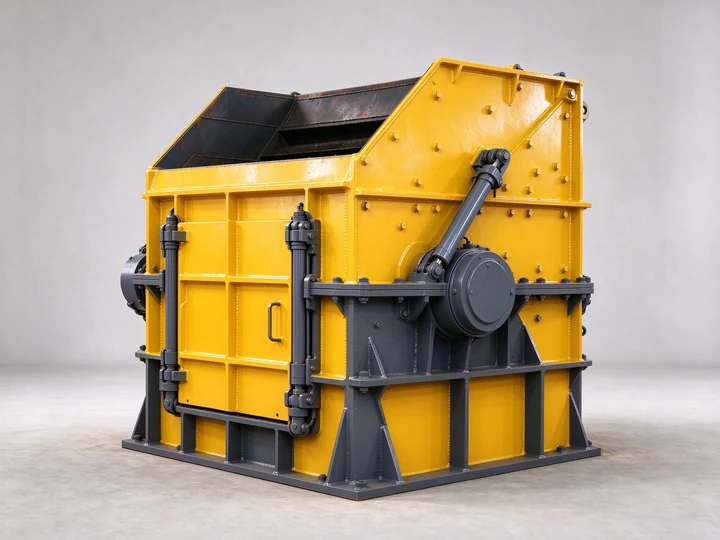
RP-IC-1315
The RP-IC-1315 Impact Crusher serves limestone processing, aggregate production and construction waste recycling. Three-stage impact plates, high-chromium blow bars and a keyless rotor connection are combined with hydraulic opening for inspection and wear-part maintenance.
Confirm your material, feed distribution and downstream requirements before selection.
Material receives repeated impacts between the rotor and impact plates. Final grading depends on operating settings and the screening circuit.
The opening arrangement provides access for chamber inspection and wear-part servicing. Isolate power and secure the assembly before maintenance.
The blow bars deliver the crushing impact. Plan inspection, replacement and spare stock around feed abrasiveness and observed wear.
The rotor uses a keyless connection. Check fastening condition, wear and vibration as part of the maintenance routine.
Use it for secondary crushing of medium-hard materials such as limestone and for sorted construction waste. Remove metal, timber and other contaminants before feeding. For hard or highly abrasive rock, compare wear costs with a jaw-and-cone crushing arrangement.
Feed is struck by the rotor blow bars, directed toward the impact plates and reduced through repeated impacts before discharge. A typical circuit includes feeding or primary crushing, impact crushing and screening. Recycling lines also need sorting and contaminant removal.
| Parameter | Value |
|---|---|
| Rotor dimensions | 1300 × 1500 mm |
| Maximum feed size | 350 mm |
| Discharge range | 40–100 mm |
| Capacity | 120–250 t/h |
| Main motor power | 180–220 kW |
| Machine weight | Approx. 19 t |
Provide material type, maximum feed size, abrasiveness, target throughput and end use. The listed 120–250 t/h range depends on feed properties, wear condition, discharge settings and circulating load. Confirm the motor configuration in the final technical proposal.
Minimum order: 1 unit. Lead time: 30–45 days, subject to the agreed order schedule. Supplied with standard export packing; confirm shipping arrangements for the destination and transport dimensions. Installation drawings, an operating manual and remote technical guidance are available. On-site supervision and operator training can be arranged for the project.
Review hardness and abrasiveness first. Highly abrasive feed may increase blow-bar consumption; a cone crusher may be worth evaluating.
Sort the feed, remove metal and other contaminants, and confirm that size and composition suit the selected configuration.
Product grading also requires screening. Match screen apertures, recirculation and crusher settings to the required sizes.
Start a conversation
Share the project details for review. This preview form does not send inquiries.