
 SUPPLIED INNER-PAGE BANNER · GENERIC ILLUSTRATION · RIGHTS PENDING
QUARRY & AGGREGATES / PHILIPPINES
Crushing and Screening Line Upgrade for a Philippine Quarry
A Philippine quarry and aggregate producer seeking to expand supply faced insufficient output from its existing line and rising maintenance costs. The supplied project account describes a RockPeak jaw-and-impact crushing and screening line intended to improve the match between primary reduction and the following crushing stages while retaining a staged processing approach.
- Location
- Philippines
- Industry
- Quarry & aggregates
- Reported delivery
- 2025
- Equipment
- RP-JC-1200 + RP-IC-1315
The starting point
A Philippine quarry and aggregate producer seeking to expand supply faced insufficient output from its existing line and rising maintenance costs. The supplied project account describes a RockPeak jaw-and-impact crushing and screening line intended to improve the match between primary reduction and the following crushing stages while retaining a staged processing approach.
Identify the bottleneck from the supply requirement
The source account places the former line's throughput at approximately 80 t/h, with maintenance stoppages from aging equipment further affecting continuous supply. For a quarry, hourly throughput is only one part of production capacity. If feeding, crushing and screening do not work together, even a machine with a higher nominal capacity may leave the line accumulating material or waiting. The upgrade therefore needed to consider stable operation and cost per unit of output together.
Match staged crushing to each processing task
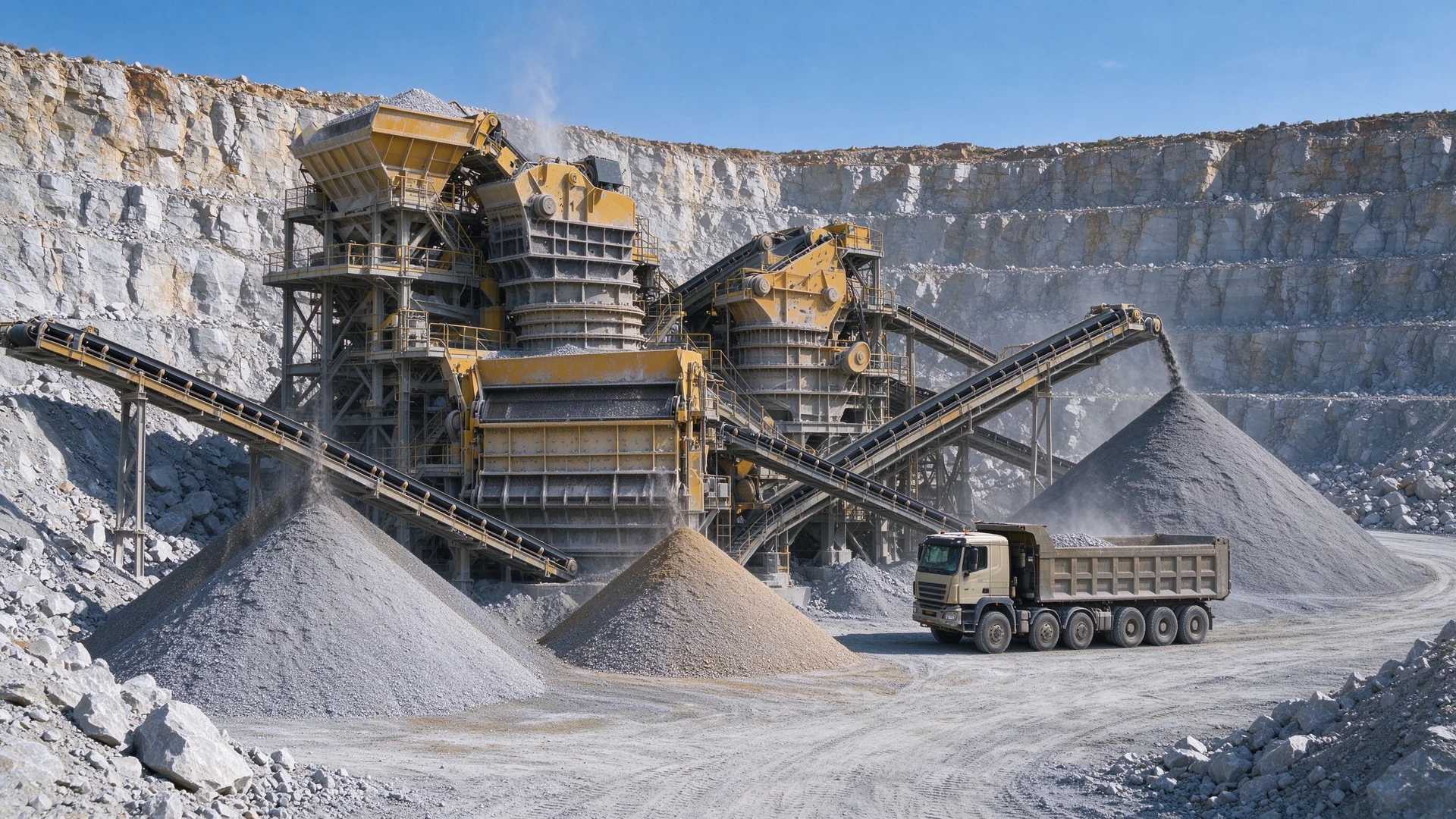
The described configuration uses an RP-JC-1200 Jaw Crusher for primary reduction, followed by an RP-IC-1315 Impact Crusher, together with feeding, conveying and screening equipment. The jaw crusher reduces large feed; the impact crusher handles material suitable for its operating conditions; and the screen separates products to the required sizes. This approach assigns a clear processing task to each stage.
Combine commissioning with operator preparation
According to the supplied narrative, equipment was delivered in 2025, installation and commissioning took approximately three weeks, and RockPeak engineers trained the operating team on site. For a similar line, commissioning should cover equipment connections, no-load checks, gradual introduction of material and the fit between stages, rather than simply confirming that each machine starts. Training should explain how feeding changes, discharge settings and screen load interact so operators can identify abnormal conditions during routine production.
Check the interface between the product and equipment
After agreeing the line configuration, check whether screen apertures, conveyor discharge points and stockpile space support the required product sizes. Poor transfers between machines can prevent crushing capacity from becoming effective output. Where later expansion is planned, leave appropriate adjustment space in the layout.
Evaluate the upgrade through whole-line performance
Client-reported figures only · measurement records and independent corroboration pending.
The client-supplied account reports throughput increasing to approximately 180 t/h and crushing cost per tonne decreasing by approximately 30%. These figures have not been independently verified and describe the material and operating conditions of this account; they are not output or financial commitments for another quarry. A before-and-after comparison should use a consistent measurement basis, including operating hours, maintenance input, wear-part consumption and conforming product output.
Evidence & publication status
The source file expressly marks public permission for the customer name, logo and project imagery as pending. The customer is anonymized here. No supplied scene is attributed to this installation. Before publication, confirm the commissioning record, baseline/output measurement basis, cost calculation and customer authorization.