

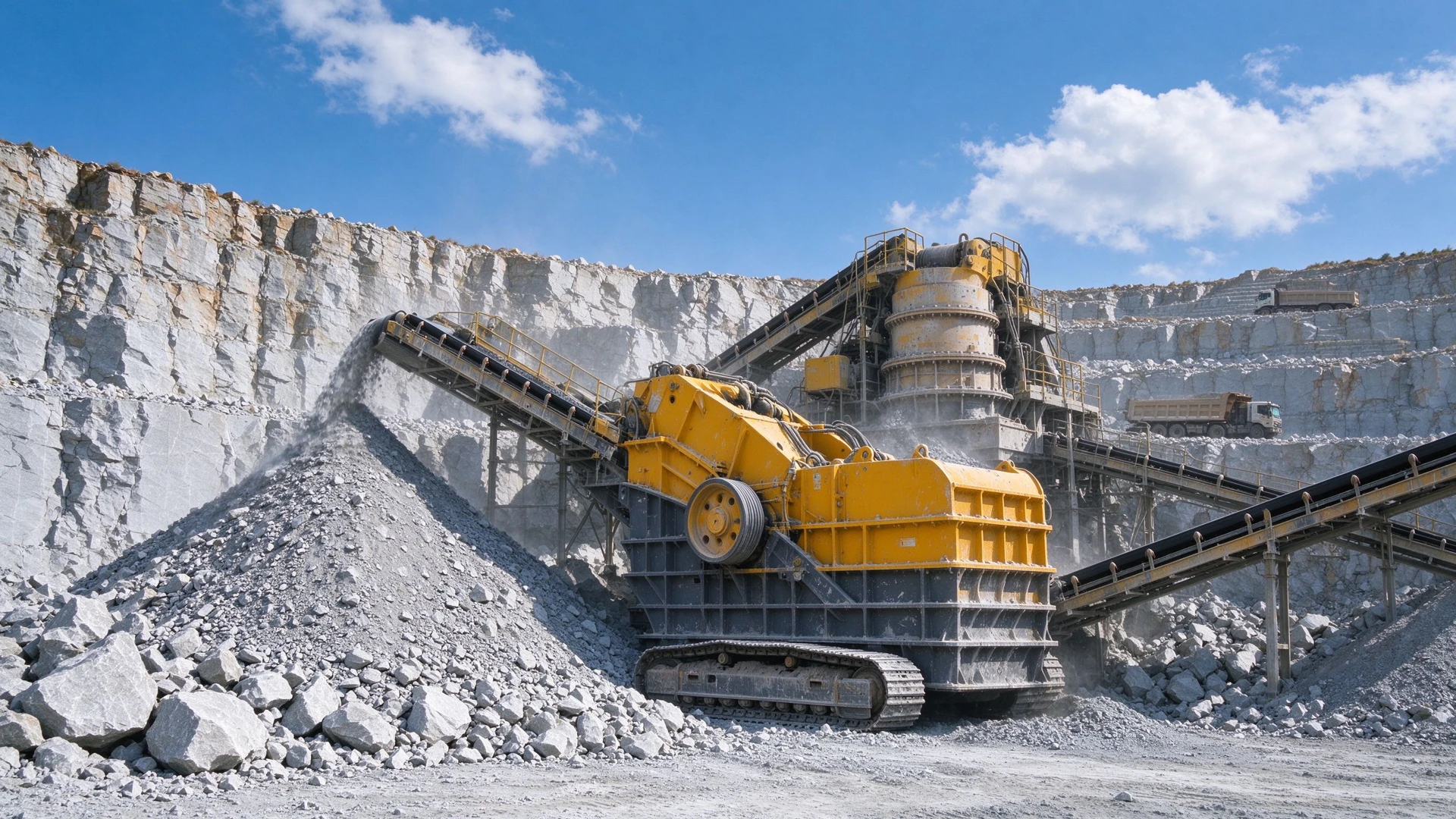
 SUPPLIED INNER-PAGE BANNER · GENERIC ILLUSTRATION · RIGHTS PENDING
METAL MINING / AFRICA
Fine Crushing Circuit Upgrade for an African Gold Mine
At an African gold mine, hard ore, inefficient existing fine-crushing equipment and frequent stoppages were limiting plant throughput. The supplied account describes an RP-CC-300 Cone Crusher used in a fine-crushing upgrade alongside the existing secondary stage, considering equipment selection together with upstream and downstream material interfaces. Project identity remains anonymous pending permission.
- Location
- Africa
- Industry
- Metal mining
- Equipment
- RP-CC-300
- Reported commissioning
- 2025
The starting point
At an African gold mine, hard ore, inefficient existing fine-crushing equipment and frequent stoppages were limiting plant throughput. The supplied account describes an RP-CC-300 Cone Crusher used in a fine-crushing upgrade alongside the existing secondary stage, considering equipment selection together with upstream and downstream material interfaces. Project identity remains anonymous pending permission.
Understand the upgrade through the fine-crushing bottleneck
Fine crushing sits toward the end of the crushing process, and fluctuations can affect continuity of feed to later stages. For hard ore, assess abrasiveness, upstream discharge distribution and product requirements alongside nominal output. Frequent stoppages may arise from wear, unstable feeding or mismatched process capacities; adding power alone can hide the underlying problem.
Match cone crushing to secondary and fine reduction
The RP-CC-300 is intended for secondary or tertiary crushing of medium-hard and hard ore, with a laminated chamber, hydraulic clearing and overload protection. The supplied maximum feed is 215 mm and capacity range is 90–260 t/h. Engineering configuration still depends on actual upstream particle sizes, feeding and screening load; the upper end of a machine range is not a whole-line production target.
Commission the interfaces between process stages
The source states that installation and production began in 2025, with integrated commissioning and capacity calibration. For comparable upgrades, observe continuity between primary crushing, conveying and fine crushing, and whether discharge changes overload screening or later processes. In a closed circuit, monitor the return-material proportion because circulating load occupies machine capacity and affects the amount of new feed that can be processed.
Keep upstream and downstream adjustments consistent
When changing the fine-crusher discharge setting, observe the receiving capacity of downstream equipment rather than pursuing smaller particles alone. Excessively fine material may add unnecessary processing, while coarse discharge can transfer the burden to later stages. Retain samples and operating records before and after adjustment, compare under the same conditions, and hand over the final configuration and operating points to site personnel.
Assess operation through throughput and particle size
Source-reported outcomes only · measurement evidence and independent verification pending.
The account reports approximately 25% higher throughput after the upgrade, more stable product size and less equipment downtime. These outcomes have not been independently verified and relate to this project's conditions; they are not guarantees for other mines. Compare before and after using comparable feed, operating time and measurement methods, recording output, particle-size distribution and reasons for maintenance stoppages separately.
Evidence & publication status
The source marks permission for customer names, logos and project photographs as pending. The customer is anonymized, and no scene is attributed to this installation. Confirm customer permission, commissioning records and the measurement basis for the reported outcomes before public release.