

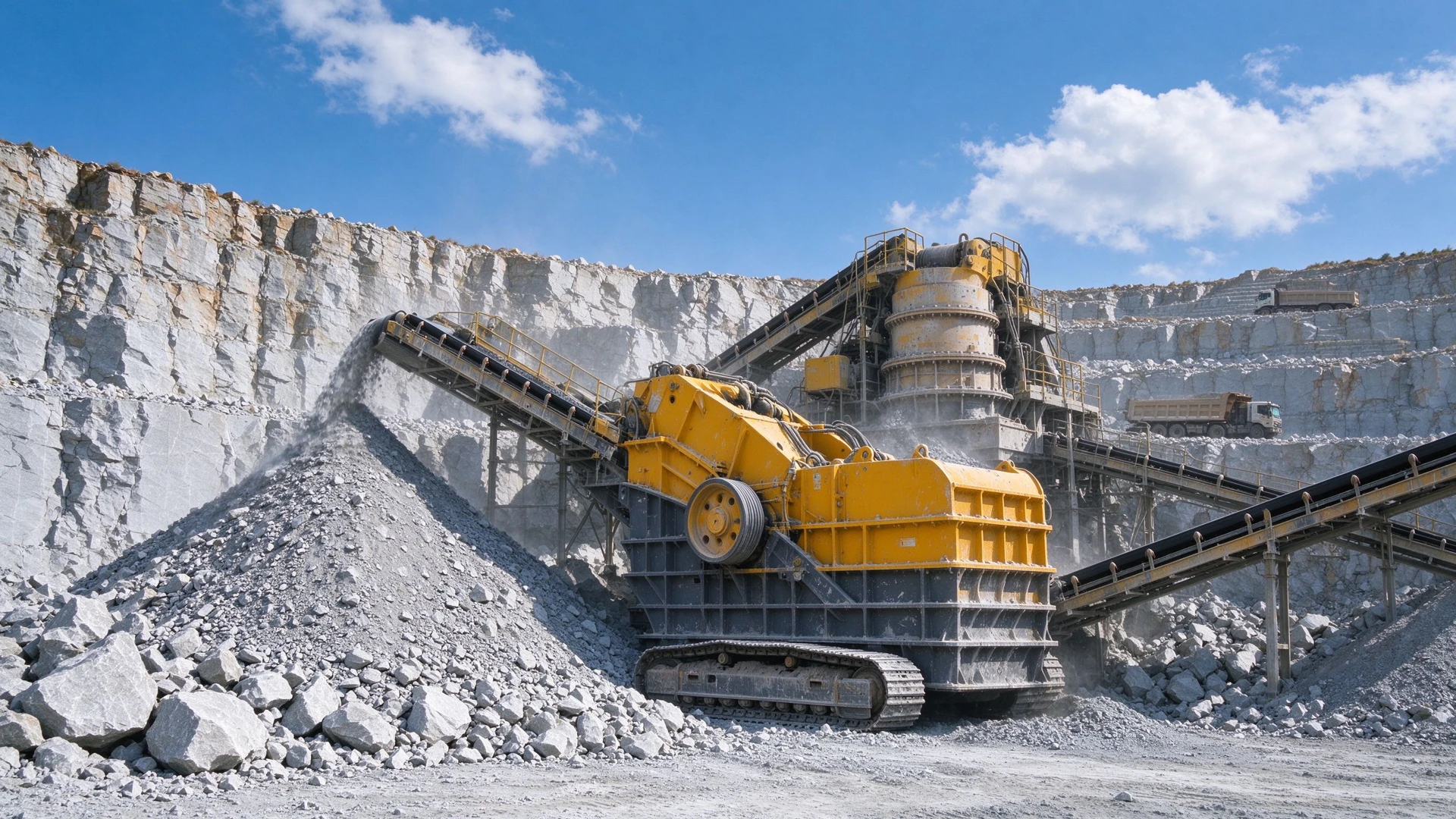
 SUPPLIED INNER-PAGE BANNER · GENERIC ILLUSTRATION · RIGHTS PENDING
CONSTRUCTION WASTE RECYCLING / MIDDLE EAST
On Site Construction Waste Recycling in the Middle East
At dispersed construction sites with limited working space, removing waste can consume vehicles and handling time. The supplied Middle East project account describes an RP-MC-100 Mobile Crushing Plant processing material where it arose, providing an equipment basis for reducing centralized removal and using recoverable aggregate. The customer remains anonymous pending publication permission.
- Location
- Middle East
- Industry
- Construction waste recycling
- Equipment
- RP-MC-100
- Reported start-up
- Within one week of arrival
The starting point
At dispersed construction sites with limited working space, removing waste can consume vehicles and handling time. The supplied Middle East project account describes an RP-MC-100 Mobile Crushing Plant processing material where it arose, providing an equipment basis for reducing centralized removal and using recoverable aggregate. The customer remains anonymous pending publication permission.
Plan around working space and material transfers
The account describes high disposal costs, dispersed worksites and restricted operating space. Sending everything to a fixed processing point could make transport organization a burden on the recycling process. On-site processing begins by identifying suitable construction waste, then locating equipment in relation to stockpiles, access routes and product destinations so processing fits the construction workflow.
Organize processing on a mobile platform
The RP-MC-100 integrates feeding, crushing and screening on a wheeled semi-trailer platform, with the main crusher selected for the material and required products. Construction waste still requires sorting before crushing to remove metal, timber and other unsuitable contaminants. Integration can reduce site interfaces between operations, but does not replace feed management or turn every mixed waste stream directly into conforming aggregate.
Coordinate production readiness with relocation
The source reports production starting within one week of equipment arrival and relocation as construction progressed. This schedule reflects that project's site conditions. Similar projects should check ground bearing capacity, support positions, power supply and vehicle access in advance, then recheck routes and permits before relocation. Positioning, safety checks and commissioning remain necessary at each new site; mobility does not mean that preparation can be skipped.
Separate recovery proportion from product quality
Record total feed, rejected contaminants and final usable aggregate separately when evaluating a recycling process. Untested crushed material should not automatically count as conforming product. Where feed differs across worksites, keep separate records of sorting and processing performance instead of treating one batch as evidence of long-term results. This also helps distinguish equipment changes from feed-management improvements.
Evaluate recovery against the intended use
Source-reported outcomes only · measurement evidence and independent verification pending.
The supplied account reports on-site crushing and recycling, approximately 90% aggregate recovery, and substantially lower waste transport costs. These are source-reported outcomes without independent verification, not commitments for another project. Recovery depends on feed and sorting conditions. Check contaminants, grading and local use requirements before assigning recycled aggregate to an engineering application; appearance after crushing alone does not establish quality.
Evidence & publication status
The source marks permission for customer names, logos and project photographs as pending. The customer is anonymized, and no scene is attributed to this installation. Confirm customer permission, commissioning records and the measurement basis for the reported outcomes before public release.